
The Pak Global Pakistan:
Italian football is on the verge of an unprecedented Champions League crisis, with the possibility that no Serie A club will feature in this season’s last 16. Since the knockout round’s reintroduction in 2003-04, Italian teams have always had representation—sometimes even three clubs—until now.
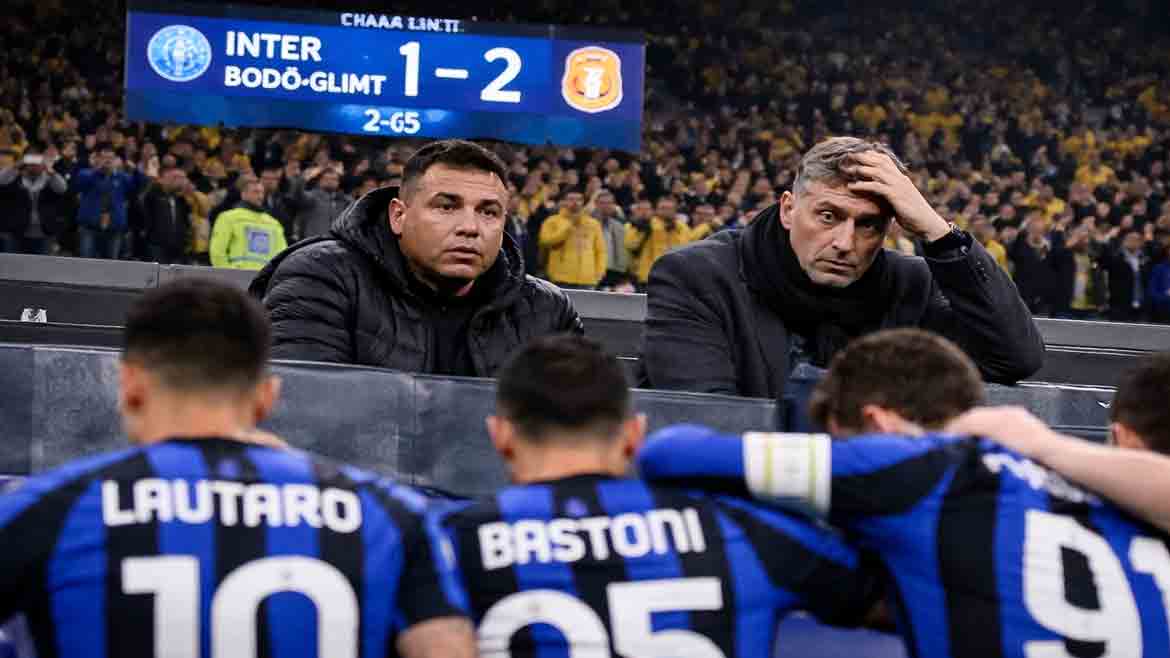
Inter Milan’s shocking elimination by Norwegian debutants Bodo/Glimt has intensified the pressure on Juventus and Atalanta to overturn first-leg deficits to maintain Italy’s long-standing presence in the competition. Juventus currently trail Galatasaray 5-2 ahead of their home leg, while Atalanta face a 2-0 aggregate deficit against Borussia Dortmund.
Inter’s exit is historic, marking the first time the Milan giants have been knocked out by a club from outside Europe’s “big five” leagues—England, Spain, Germany, Italy, and France. Italian football journalist Daniele Verri described the situation as a “complete debacle” for the nation’s clubs and a wake-up call for the sport in Italy.
The symbolic presence of former Inter stars Ronaldo and Christian Vieri at San Siro during the defeat highlighted the contrast between Serie A’s past glory and its current struggles. The league, once the envy of world football with its star-studded squads and Champions League triumphs by AC Milan and Inter, now faces questions about its future competitiveness.
Despite leading Serie A comfortably, Inter’s European form faltered, finishing 10th in the group stage, with Juventus and Atalanta also underperforming. Italian football experts point to systemic issues, criticizing the slow style of play and lack of intensity compared to other European leagues.
European football analyst Julien Laurens emphasized the decline in Italian clubs’ youth development and scouting, contrasting it with the success of smaller clubs like Sporting CP, Club Brugge, and Bodo/Glimt. The exodus of top Italian talent to foreign leagues further compounds the problem.
With Italy’s national team also facing a play-off to qualify for the upcoming World Cup, the challenges for Italian football at both club and international levels are mounting, signaling a critical juncture that demands structural reforms.