
The Pak Global Pakistan:
In a landmark shift in foreign policy, Bolivia has officially reopened its cooperation with the United States Drug Enforcement Administration (DEA), marking the end of a nearly 20-year hiatus in joint efforts to combat drug trafficking.
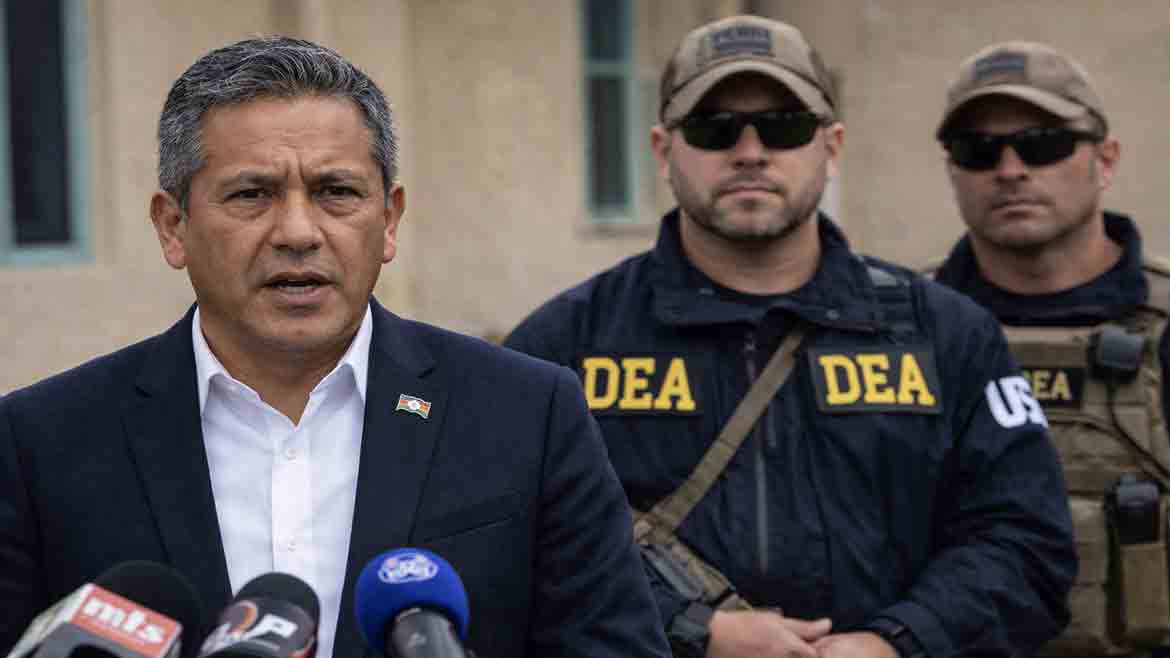
Bolivian Minister of Government Marco Oviedo confirmed on Monday that DEA agents are already operating within the country. “The DEA is in Bolivia,” he stated, adding that alongside the US agency, Bolivia is also collaborating with European intelligence and police forces. The initial focus of this renewed partnership will be on strengthening border surveillance and dismantling drug trafficking networks.
This move reverses a 2008 order issued by former President Evo Morales, who expelled the DEA from Bolivia, accusing the agency of interfering with the country’s sovereignty and destabilizing his government. Morales’s administration had suspended all drug enforcement cooperation with the US, maintaining strong support from rural regions where coca cultivation—a traditional practice and economic mainstay—remains prevalent.
Bolivia, a key coca producer alongside Colombia and Peru, has long faced criticism over the US-led “war on drugs,” which opponents say devastates rural farmers by forcibly eradicating coca crops, threatening their livelihoods.
The political landscape shifted in 2025 when Bolivia’s socialist Movement for Socialism (MAS) coalition fractured, leading to a presidential run-off between centrist Rodrigo Paz and former right-wing president Jorge Quiroga. Both candidates campaigned on improving relations with the US, highlighting the importance of restoring ties to attract investment and address economic challenges.
Rodrigo Paz won the presidency with nearly 55% of the vote and swiftly moved to normalize diplomatic relations with the US. Both nations have agreed to appoint ambassadors for the first time in nearly 18 years, signaling a new era of cooperation.
However, questions remain about the scope and limits of DEA operations in Bolivia, as Morales and other left-wing figures retain significant support in parts of the country. Bolivian Foreign Minister Fernando Aramayo noted that negotiations are ongoing to finalize the details of cooperation and operational boundaries.
Meanwhile, the US administration under President Donald Trump has intensified its regional anti-drug efforts, including designating major drug cartels as “foreign terrorist organizations” and authorizing military strikes against suspected drug trafficking hubs, raising concerns about human rights and the militarization of law enforcement.
As Bolivia embarks on this new chapter of international collaboration, the world watches closely to see how this partnership will influence the fight against drug trafficking and the country’s broader political and economic trajectory.