

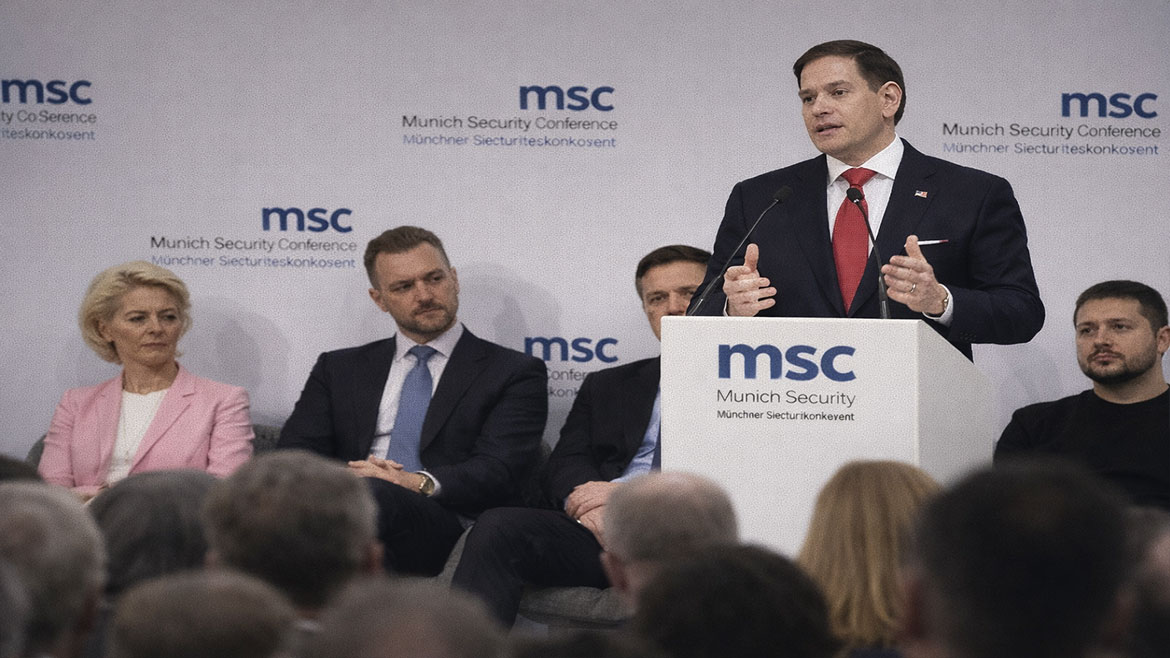
At the Munich Security Conference, U.S. Secretary of State Marco Rubio addressed European leaders with a message aimed at restoring transatlantic ties after more than a year of diplomatic tensions. While his speech earned a standing ovation, it offered few concrete commitments and notably avoided mentioning Russia, instead focusing on shared values, migration, and climate policies.
Rubio emphasized the deep historical bond between the U.S. and Europe, recalling their joint sacrifices from Kapyong to Kandahar. However, he also warned that Western missteps after the Cold War—such as overreliance on international institutions and uncontrolled migration—have weakened societal cohesion and threatened cultural continuity. He criticized certain European energy policies as driven by a “climate cult,” warning of their unintended economic consequences. Still, Rubio pledged a “new century of prosperity” with Europe as America’s “oldest friends and cherished allies.”
European leaders responded with cautious optimism. Ursula von der Leyen found the speech “very reassuring” but reminded listeners that some voices within the U.S. administration take a tougher approach. Lithuania’s former foreign minister Gabrielius Landsbergis pointed out that many Europeans prioritize security over Rubio’s framing of migration and deindustrialization as existential threats.
Rubio’s measured tone marked a sharp contrast to last year’s more confrontational remarks by Vice President JD Vance, yet analysts noted that key Trump-era policies—such as tariffs, Greenland ambitions, and unilateral security actions—remain unchanged.
Ukraine remained a central concern during the conference. European leaders expressed wariness about Trump’s approach to peace negotiations, fearing U.S. pressure could lead to concessions favoring Russia and undermining Ukraine’s position. Ukrainian President Volodymyr Zelenskyy acknowledged U.S. pressure to reach a deal but insisted that conceding to Russia would only create a temporary pause, not a lasting resolution. EU foreign affairs chief Kaja Kallas warned against pressuring the victim rather than the aggressor, cautioning that such concessions could embolden Moscow.
Overall, Rubio’s speech sought to reassure Europe but highlighted the complexities and mixed messages within the U.S. administration. While appreciated, the gesture did little to resolve ongoing tensions, with Trump-era policies and uncertainties over Ukraine continuing to challenge the transatlantic relationship.
