

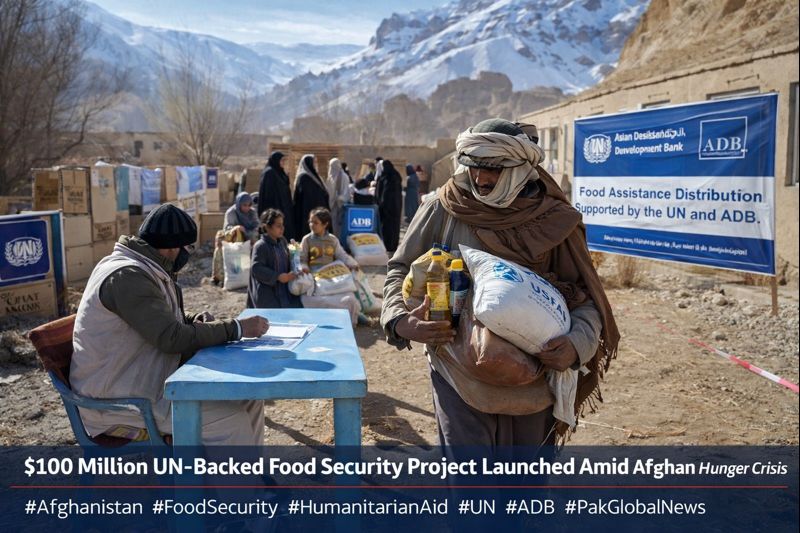
KABUL: A new $100 million food security initiative is being launched in Afghanistan to confront a deepening hunger crisis worsened by mass deportations of Afghans from neighbouring countries, shrinking foreign aid and a fragile economy.
According to the United Nations, the two-year programme is supported by the UN and the Asian Development Bank and is designed to assist more than 151,000 vulnerable families across the country. Beneficiaries will include Afghans returning from Iran and Pakistan as well as communities hit by recent earthquakes and floods.
Humanitarian conditions in Afghanistan have sharply deteriorated as families lose vital remittances from abroad and struggle with limited job opportunities. Aid agencies warn that funding gaps and harsh winter weather are further increasing pressure on already fragile households.
UN Food and Agriculture Organization (FAO) Director-General Qu Dongyu said the project will not only provide urgent food assistance but also work to strengthen local agriculture, reduce reliance on imports and encourage private sector recovery in rural areas.
A recent FAO assessment projects that 17.4 million people in Afghanistan could face acute food insecurity in 2026, while around 4.7 million are at risk of acute malnutrition.
The World Food Programme has reported the largest recorded surge in malnutrition in the country last year and cautions that, without sustained support, the situation is likely to worsen.
The new initiative aims to boost local food production, protect livelihoods and build resilience against future shocks as Afghanistan grapples with overlapping humanitarian and economic challenges.