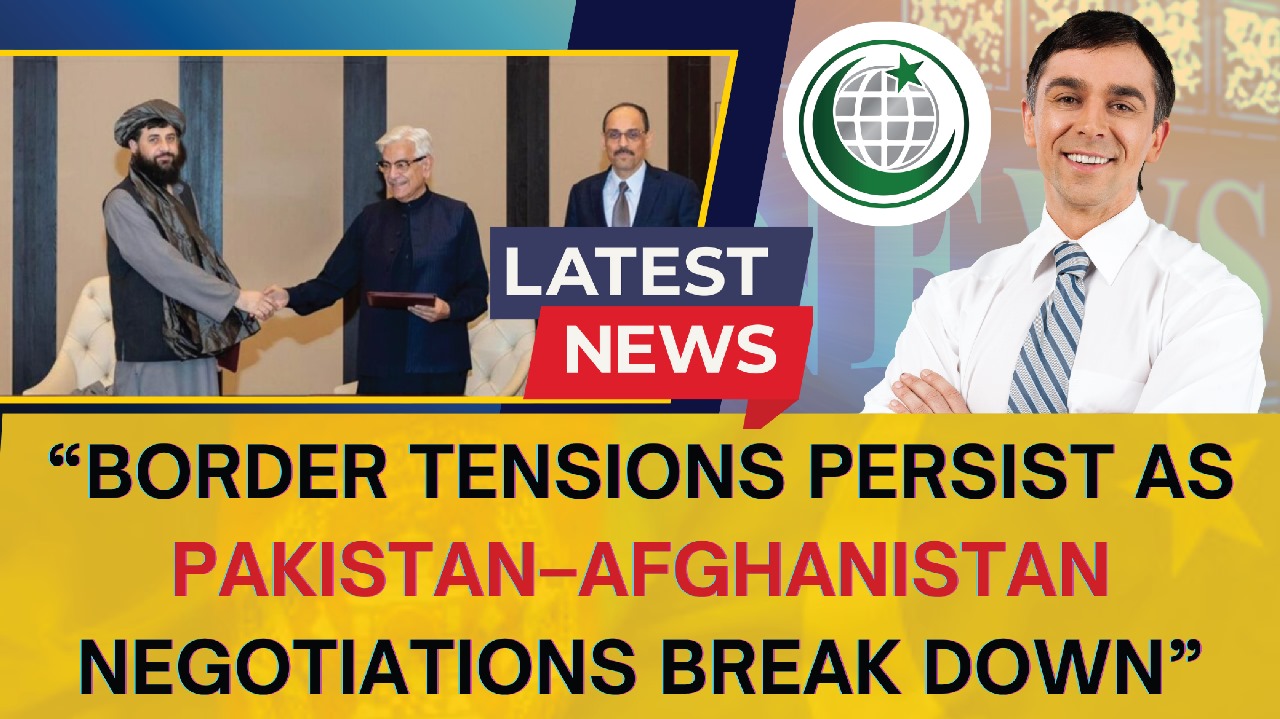
ISLAMABAD, Pakistan — After four days of intense negotiations in Istanbul, aimed at easing the armed standoff between Pakistan and Afghanistan, Pakistani officials confirmed the talks ended without any breakthrough.
In an early-morning post on the social-media platform X, Information Minister Attaullah Tarar accused the Afghan delegation of resorting to “deflection and ruses” instead of seriously addressing Islamabad’s concerns.
“The dialogue thus failed to bring about any workable solution,” he declared.
The discussions—mediated by Doha (Qatar) and Istanbul (Türkiye)—followed an earlier round in Doha which secured a temporary cease-fire on October 19 after a week of deadly cross-border fighting. The hostilities, sparked by strikes and militant incursions, resulted in dozens of casualties.
According to Pakistani security officials, Monday’s session in Istanbul lasted nearly 18 hours, underscoring the gravity of the crisis.
However, the talks collapsed when the Afghan side reportedly shifted its position on Pakistan’s key demand: that Kabul take robust and verifiable action against the Tehrik‑e‑Taliban Pakistan (TTP)—a militant group held responsible for repeated attacks on Pakistani soil. One Pakistani official, speaking on condition of anonymity because of the sensitivity of the process, alleged that fresh “instructions received from Kabul” repeatedly undermined the negotiations.
The collapse of the Istanbul round marks a major setback in efforts to stabilise bilateral relations, which have long been strained by border clashes, militant safe-havens, and deep mutual distrust. Pakistan says it is particularly aggrieved by the use of Afghan territory as a launch-pad for attacks. Meanwhile, Kabul denies supporting such groups and argues that it lacks full control over all armed factions.
In a related warning, Defence Minister Khawaja Muhammad Asif had declared that should the dialogue fail, Pakistan would be prepared for “open war” — suggesting that Islamabad’s patience has reached a critical juncture.
For Pakistan, the stakes are high: Islamabad is insisting on concrete guarantees that Afghan soil will not be exploited by militants targeting its territory. For Afghanistan, the challenge lies in balancing internal control over militant factions, maintaining sovereignty, and responding to Pakistani pressure — all under the watchful eye of mediators from Qatar and Türkiye.
With no agreement reached, the cease-fire remains fragile and the possibility of renewed military confrontation looms larger than ever.