

Oil Prices Rise as US-Iran Talks Keep Global Markets on Edge
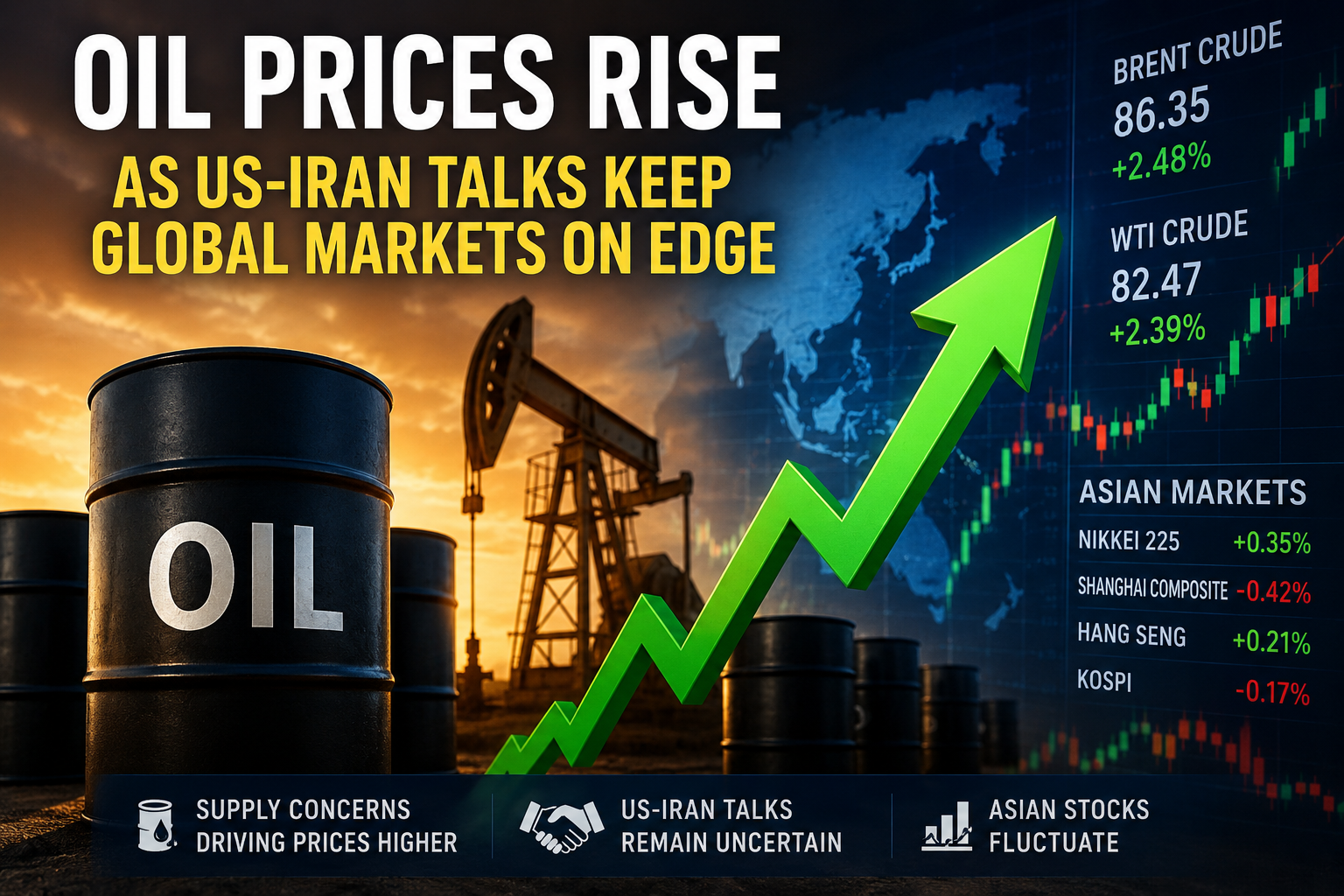
Oil Prices Rise as uncertainty surrounding ongoing US-Iran talks continues to influence global financial markets. Investors remain cautious after fresh developments raised concerns over the future of Iranian oil exports, while Asian stock markets traded mixed as traders assessed the impact of higher energy prices on inflation and economic growth. The latest market movements highlight how geopolitical tensions continue to shape investor sentiment across the world.
Oil Prices Gain on Supply Concerns
Global crude oil prices moved higher after reports suggested that negotiations between the United States and Iran may take longer than expected. Market participants fear that any delay or failure in reaching an agreement could keep sanctions on Iranian oil exports in place, reducing global supply and supporting higher oil prices.
Brent crude and U.S. West Texas Intermediate (WTI) both recorded gains as traders reacted to the latest geopolitical developments. Analysts believe that uncertainty surrounding oil-producing nations often creates volatility in energy markets, especially when global demand remains stable.
Investors Remain Cautious
Financial markets have become increasingly sensitive to news related to international diplomacy. Even minor updates from the US-Iran negotiations have the potential to move oil prices within hours. Investors are therefore avoiding unnecessary risks until there is greater clarity regarding the outcome of the discussions.
Asian Stock Markets Show Mixed Performance
While Oil Prices Rise, Asian stock markets displayed mixed performance during the latest trading session. Some major indexes managed to post modest gains, supported by strong corporate earnings and improved investor confidence. However, other markets declined as higher energy costs increased concerns about inflation and slower economic growth.
Rising crude oil prices generally increase transportation, manufacturing, and production expenses. As businesses face higher operating costs, consumers may also experience rising prices for goods and services. This creates additional pressure on economies that are already dealing with inflation and higher interest rates.
Impact on Different Industries
The rise in oil prices does not affect every industry in the same way. Energy companies often benefit from stronger crude prices because higher oil prices improve revenue and profitability. On the other hand, sectors such as airlines, logistics, shipping, and manufacturing usually face increased expenses due to higher fuel costs.
Investors are carefully monitoring these sectors to determine which companies may perform better if Oil Prices Rise further in the coming weeks.
US-Iran Talks Remain the Key Market Driver
The ongoing negotiations between the United States and Iran remain one of the most important factors influencing the global energy market. If both sides reach a diplomatic agreement, restrictions on Iranian oil exports could be eased, increasing global supply and helping stabilize oil prices.
However, if talks remain stalled or political tensions increase, traders expect Oil Prices Rise to remain the dominant trend because of continued concerns over limited supply. Market analysts believe geopolitical uncertainty will continue to play a major role in determining future price movements.
What Investors Are Watching
Apart from the US-Iran negotiations, investors are also paying close attention to OPEC+ production decisions, global fuel demand, inflation data, and central bank policies. These factors, combined with geopolitical developments, are expected to determine the direction of oil prices during the coming weeks.
Any unexpected announcement from major oil-producing countries could quickly change market sentiment and create additional volatility in both commodity and stock markets.
Global Market Outlook
Market experts believe investors are likely to remain cautious until there is more certainty regarding international diplomatic efforts. Although some analysts expect oil prices to stabilize if negotiations improve, others warn that supply concerns could continue supporting higher prices throughout the near term.
As Oil Prices Rise, governments, businesses, and consumers around the world will continue monitoring energy markets closely. Higher fuel prices can influence transportation costs, inflation rates, consumer spending, and overall economic growth. For this reason, every update related to US-Iran talks will remain an important driver of global financial markets.
Overall, Oil Prices Rise because uncertainty over US-Iran negotiations continues to raise concerns about future oil supplies. At the same time, Asian stock markets remain volatile as investors evaluate economic risks and geopolitical developments. Until there is a clear outcome from the talks, oil prices and global markets are expected to remain highly sensitive to breaking news and policy changes.
