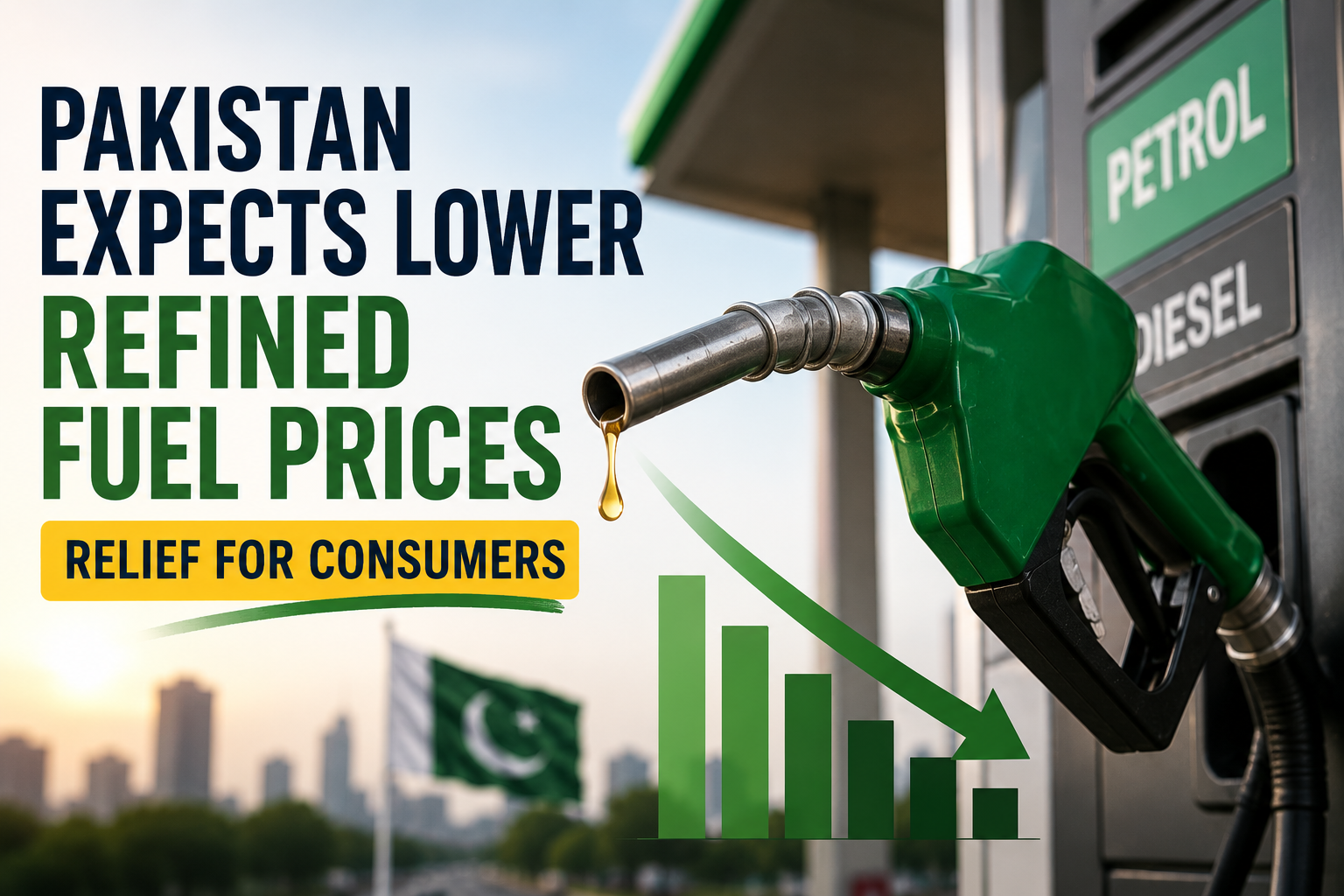
Pakistan Expects Lower Refined Fuel Prices, Promises Relief for Consumers
Focus Keyword: Pakistan Expects Lower Refined Fuel Prices
Pakistan is expected to see lower refined fuel prices in the coming weeks as international oil markets continue to stabilize. Government officials have indicated that any reduction in global refined fuel costs could be reflected in domestic fuel prices, providing relief to consumers and businesses struggling with high transportation and energy expenses.
Fuel prices remain one of the most closely watched economic indicators in Pakistan because they directly influence inflation, transportation costs, electricity generation, and the prices of everyday goods. If international fuel prices continue to ease, millions of consumers could benefit from lower expenses across multiple sectors of the economy.
Pakistan Expects Lower Refined Fuel Prices Amid Stable Global Markets
Recent movements in international energy markets suggest that refined fuel prices are gradually returning to more stable levels after periods of volatility.
Government officials have stated that Pakistan’s fuel pricing mechanism is linked to international benchmark prices. As global prices adjust, domestic fuel prices are also expected to reflect those changes according to the country’s pricing policy.
If this trend continues, consumers may soon experience lower petrol and diesel prices at fuel stations across the country.
How Fuel Prices Are Determined in Pakistan
Pakistan follows an international pricing mechanism when calculating local petrol and diesel prices.
Several factors influence the final retail price, including:
International Oil Prices
Global crude oil and refined fuel prices remain the biggest factor affecting local fuel rates.
Exchange Rate
The value of the Pakistani Rupee against the US Dollar directly impacts import costs.
Government Taxes and Levies
Petroleum levy, customs duties, and other government charges contribute to the final price paid by consumers.
Transportation and Distribution Costs
Fuel transportation, storage, and distribution expenses also affect retail prices.
Lower Fuel Prices Could Ease Inflation
One of the biggest benefits if Pakistan Expects Lower Refined Fuel Prices becomes reality is the potential reduction in inflation.
Lower fuel costs can reduce transportation expenses for businesses, helping decrease the cost of delivering products across the country.
Many industries depend heavily on fuel, including:
- Agriculture
- Manufacturing
- Public transport
- Logistics
- Retail businesses
Reduced operating costs may eventually help stabilize prices for essential goods and services.
Benefits for Consumers
Consumers are likely to benefit in several ways if fuel prices decline.
Lower Transportation Costs
Private vehicle owners, taxi drivers, and transport companies may spend less on fuel.
Reduced Business Expenses
Companies that rely on transportation could experience lower operating costs.
Positive Economic Impact
Lower fuel prices may improve purchasing power for households by reducing everyday expenses.
Although the impact may not be immediate, stable fuel prices generally contribute to better economic confidence.
Challenges That Could Affect Fuel Prices
Despite positive expectations, several factors may continue influencing Pakistan’s fuel pricing outlook.
Global Oil Market Volatility
Unexpected geopolitical developments or supply disruptions could increase international oil prices.
Currency Fluctuations
A weaker Pakistani Rupee can offset the benefits of falling global fuel prices.
Government Fiscal Policies
Changes in petroleum levies or taxation may influence final retail fuel prices regardless of international market trends.
These factors mean fuel prices remain subject to regular review.
Why Fuel Prices Matter to Pakistan’s Economy
Fuel prices have a direct impact on almost every sector of Pakistan’s economy.
Transportation companies use diesel for trucks and buses.
Farmers depend on fuel for agricultural machinery.
Manufacturing industries require fuel for production and logistics.
Even electricity generation in some areas depends on petroleum products.
Because of this, any significant reduction in fuel prices can positively affect businesses and consumers alike.
Outlook for the Coming Weeks
Energy market analysts believe international oil prices will continue to be monitored closely.
If global refined fuel prices remain stable, Pakistan could continue adjusting domestic fuel prices accordingly.
Consumers, businesses, and investors will be watching future government announcements for any official revisions to petrol and diesel prices.
While market conditions can change quickly, lower international fuel prices generally create opportunities for domestic price relief.
Final Thoughts
The expectation that Pakistan Expects Lower Refined Fuel Prices offers hope for consumers facing rising living costs. Lower fuel prices could reduce transportation expenses, ease inflationary pressure, and support economic activity across multiple sectors.
Although international market conditions and exchange rates remain important factors, any reduction in domestic fuel prices would likely provide welcome financial relief to households and businesses throughout Pakistan.
FAQs
1. Why does Pakistan expect lower refined fuel prices?
Pakistan expects lower refined fuel prices because international refined petroleum prices have eased after recent market volatility. If this trend continues, domestic fuel prices may also decrease.
2. How are fuel prices determined in Pakistan?
Fuel prices in Pakistan are based on international petroleum prices, the exchange rate of the Pakistani Rupee against the US Dollar, government taxes, petroleum levies, and distribution costs.
3. Will lower refined fuel prices reduce inflation in Pakistan?
Lower fuel prices can help reduce transportation and production costs, which may ease inflation and lower the prices of goods and services over time.
4. When are fuel prices revised in Pakistan?
The Government of Pakistan usually reviews and announces petrol and diesel prices every two weeks based on recommendations from the relevant authorities.
5. What factors can affect future fuel prices?
Global crude oil prices, exchange rate fluctuations, international market conditions, and government taxes all influence fuel prices in Pakistan.
6. Who benefits from lower fuel prices?
Lower fuel prices benefit private motorists, transport companies, businesses, farmers, manufacturers, and consumers by reducing operating and transportation costs.
External Links (Authority Websites)
Use these as external references in your article.
1. Ministry of Finance Pakistan
Anchor Text: Ministry of Finance Pakistan
2. Oil and Gas Regulatory Authority (OGRA)
Anchor Text: Oil and Gas Regulatory Authority (OGRA)
3. Pakistan State Oil (PSO)
Anchor Text: Pakistan State Oil
4. International Energy Agency (IEA)
Anchor Text: International Energy Agency
5. OPEC
Anchor Text: Organization of the Petroleum Exporting Countries (OPEC)