US Strikes Iranian Oil Tanker as Tehran Launches Attacks on Kuwait and Jordan
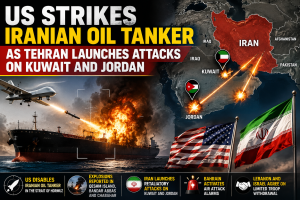
The Middle East witnessed another dramatic escalation after the US Strikes Iranian Oil Tanker operation coincided with a new wave of military action between the United States and Iran. According to official US military statements, American forces carried out fresh strikes on Iranian targets, while Iranian media reported explosions in several strategic locations, including Qeshm Island, Bandar Abbas, and Chabahar.
The latest developments have heightened fears of a wider regional conflict, with Iran responding through retaliatory attacks targeting what it described as US-linked assets in Kuwait and Jordan. The exchange of military operations has also raised concerns about the security of the Strait of Hormuz, one of the world’s most important shipping routes for oil exports.
US Strikes Iranian Oil Tanker in Strait of Hormuz
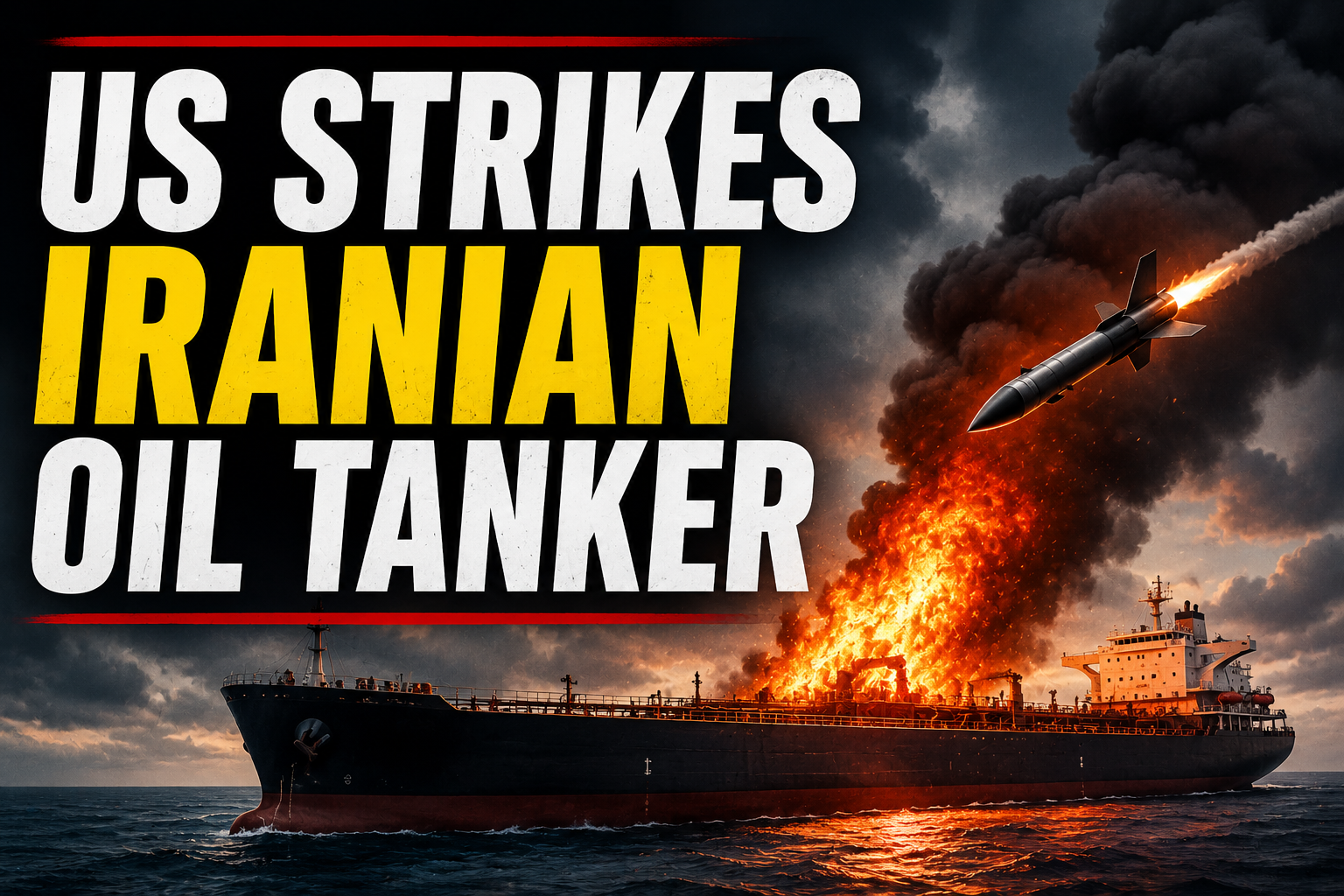
The US Strikes Iranian Oil Tanker operation marked one of the most significant military actions in recent weeks. According to the US military, an Iranian oil tanker attempting to sail toward an Iranian port through the Strait of Hormuz was disabled using Hellfire missiles.
US officials stated that the action was taken to prevent the vessel from supporting ongoing military logistics. While the Pentagon described the strike as a defensive measure, Iranian authorities condemned the attack and accused Washington of violating international maritime laws.
The Strait of Hormuz remains a critical global energy corridor, with nearly one-fifth of the world’s oil shipments passing through the narrow waterway each day. Any disruption in the region immediately raises concerns over global oil supplies and international shipping.
Explosions Reported Across Southern Iran
Iranian state-linked media reported multiple explosions following the latest round of US military operations. The affected areas reportedly included:
Qeshm Island
Qeshm Island, located near the Strait of Hormuz, is considered strategically important because of its proximity to major naval routes and military facilities.
Bandar Abbas
Bandar Abbas serves as Iran’s primary naval base and one of its busiest commercial ports. Reports suggested loud explosions and increased military activity around the city following the strikes.
Chabahar
Chabahar, located on Iran’s southeastern coast, is another key port with both commercial and strategic significance. While damage assessments remain limited, local reports indicated several explosions were heard throughout the area.
Independent verification of the reported damage remains limited, and officials have not released complete casualty figures.
Iran Launches Retaliatory Attacks on Kuwait and Jordan
Shortly after the reported US strikes, Iran announced retaliatory operations against what it described as American military assets across the region.
Military officials in Tehran claimed that attacks targeted facilities connected to US operations in both Kuwait and Jordan. Although the full extent of the damage has not been independently confirmed, regional governments immediately activated emergency response measures.
Bahrain also activated nationwide air attack alarms as a precaution, urging residents to remain alert amid fears that the conflict could spread further across the Gulf.
Regional security analysts believe these retaliatory strikes represent one of the most dangerous phases of the ongoing confrontation between Washington and Tehran.
Regional Security Concerns Continue to Grow
The latest exchange has significantly increased concerns among neighboring countries.
Several Gulf nations have strengthened military readiness while increasing surveillance around critical infrastructure, airports, ports, and oil facilities. Commercial airlines have also reviewed flight paths to avoid potential conflict zones.
International observers warn that continued military exchanges could affect:
- Global oil markets
- International shipping routes
- Regional air travel
- Economic stability across the Middle East
Many governments are closely monitoring developments while urging both sides to avoid further escalation.
Lebanon and Israel Reach Limited Withdrawal Agreement
Amid the rising tensions, the United States announced progress in diplomatic negotiations involving Lebanon and Israel.
Following discussions held in Rome, US officials stated that both countries had agreed on the structure and guidelines for a limited Israeli troop withdrawal from southern Lebanon.
Although complete details have not been released, the agreement is viewed as a positive diplomatic development during an otherwise volatile period across the Middle East.
Officials hope the arrangement could reduce tensions along the Lebanon-Israel border and prevent additional military confrontations.
Global Oil Markets React to Rising Tensions
Financial markets responded quickly after reports that the US Strikes Iranian Oil Tanker operation had disrupted activity in the Strait of Hormuz.
Energy analysts warned that prolonged instability could increase oil prices due to concerns over supply disruptions. Insurance costs for commercial shipping through the Gulf may also rise if security risks continue.
Several international shipping companies are reportedly monitoring the situation and reviewing alternative routes where possible.
Investors worldwide remain focused on military developments, as further escalation could have significant consequences for global trade and energy supplies.
International Community Calls for Restraint
World leaders have urged both the United States and Iran to exercise restraint and pursue diplomatic solutions.
Several governments have emphasized the importance of protecting civilian lives and maintaining freedom of navigation through international waterways. Diplomatic channels remain active as international organizations work to prevent the conflict from expanding into neighboring countries.
Security experts believe that continued dialogue will be essential in reducing tensions and avoiding a broader regional crisis.
Conclusion
The US Strikes Iranian Oil Tanker operation represents another major escalation in the ongoing confrontation between the United States and Iran. With reported explosions across southern Iran, retaliatory attacks targeting Kuwait and Jordan, and increased military readiness throughout the Gulf, the situation remains highly volatile.
At the same time, diplomatic progress between Lebanon and Israel offers a rare sign of hope amid growing instability. As global attention remains focused on the Middle East, governments, financial markets, and security experts continue to closely monitor every new development.
The coming days are expected to play a critical role in determining whether the crisis moves toward de-escalation through diplomacy or continues to expand into a broader regional conflict.