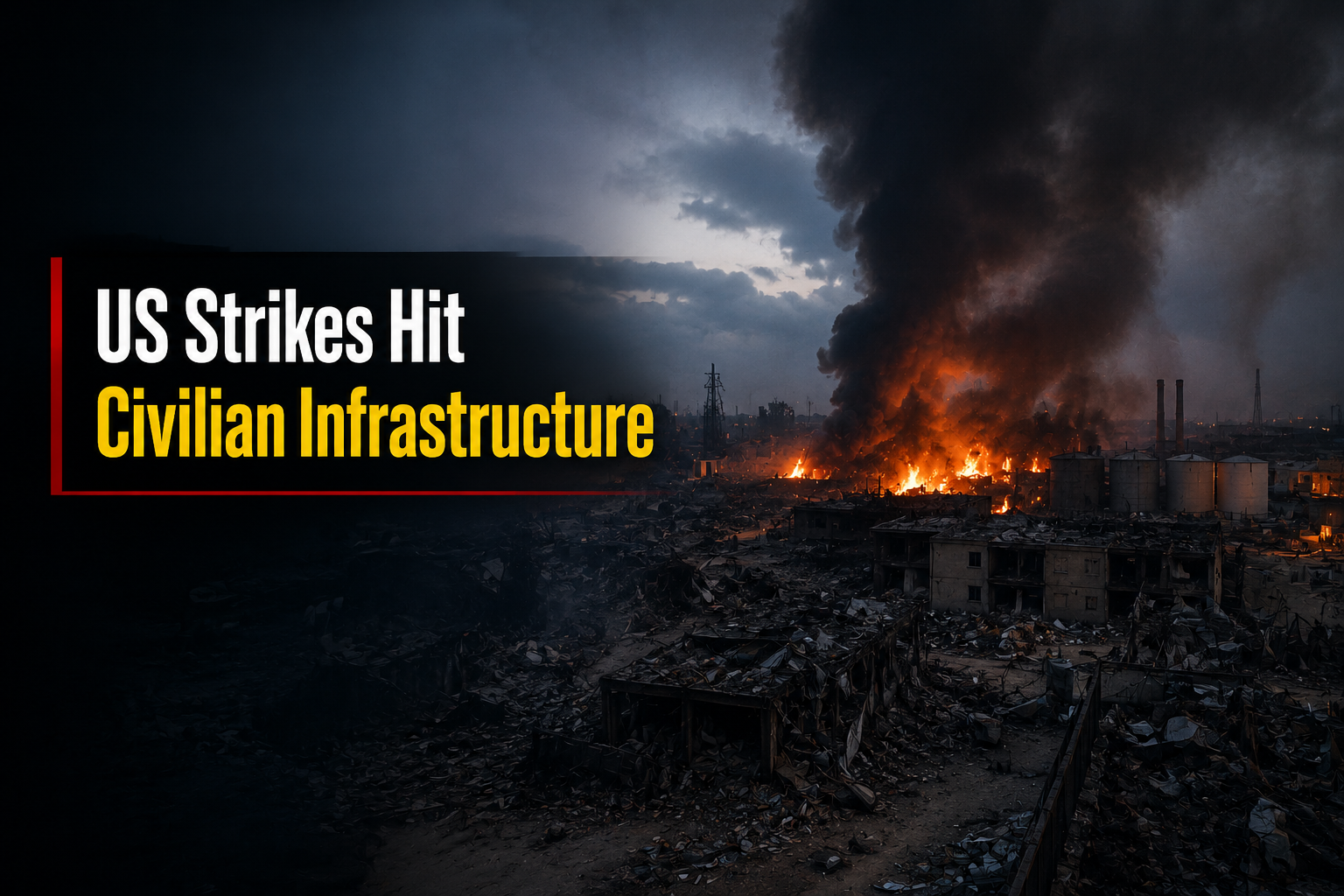
US Strikes Hit Civilian Infrastructure in Southern Region: What We Know So Far
Focus Keyword: US Strikes on Civilian Infrastructure
The conflict between the United States and Iran continues to intensify, with reports indicating that US Strikes on Civilian Infrastructure have entered their sixth consecutive night. According to local officials in southern Iran, several civilian facilities, including power infrastructure and a railway station in Bandar Abbas, were affected during the latest wave of attacks.
The developments have further heightened tensions across the Middle East, with Iran claiming it has responded by targeting US military assets in the region. Meanwhile, neighboring Gulf countries have also reported security incidents linked to missile and drone activity, raising concerns about the conflict expanding beyond Iran’s borders.
As diplomatic efforts remain limited, the situation is drawing global attention due to its potential humanitarian, economic, and geopolitical consequences.
US Strikes on Civilian Infrastructure Continue for Sixth Night
Reports from southern Iran indicate that the latest military operations targeted multiple locations in Bandar Abbas, one of the country’s most important port cities.
Local officials say several civilian sites were damaged during the strikes, including electricity infrastructure and a railway station. While authorities have confirmed damage to public facilities, the full extent of casualties and destruction has not yet been independently verified.
The continued military campaign marks the sixth straight night of operations, making it one of the most prolonged periods of direct military action between the United States and Iran in recent years.
The US Strikes on Civilian Infrastructure have become a major concern for international observers, with humanitarian organizations closely monitoring developments.
Why Bandar Abbas Is Strategically Important
Bandar Abbas plays a critical role in Iran’s economy and transportation network.
Located on the Persian Gulf, the city serves as one of Iran’s busiest commercial ports and acts as a gateway for imports, exports, and energy shipments. It also connects several railway lines and highways that support domestic trade.
Key Importance of Bandar Abbas
- Major commercial shipping hub
- Important railway connection
- Strategic energy infrastructure
- Critical access to the Strait of Hormuz
- Economic center for southern Iran
Any disruption to infrastructure in Bandar Abbas could have significant economic consequences for both Iran and regional trade.
Iran Claims Retaliatory Military Action
Iranian military officials stated that their forces launched operations targeting US aircraft stationed at a military base in Bahrain.
While Iranian authorities described the action as a response to ongoing attacks, there has been no independent confirmation regarding the reported damage or casualties.
Regional governments continue to monitor the situation carefully as tensions remain high.
Military analysts warn that continued exchanges between both sides increase the possibility of a broader regional conflict involving multiple countries.
Gulf Nations Respond to Regional Security Threats
The conflict is no longer affecting only Iran and the United States.
Authorities in Kuwait reported that their armed forces responded to missile and drone threats during the latest escalation.
Meanwhile, officials in Qatar confirmed that falling missile debris injured a child after the country’s air defense systems intercepted incoming projectiles.
Although the reported injury was limited, the incident highlights the growing risks faced by neighboring countries as military operations continue.
Regional Concerns
Civilian Safety
Governments across the Gulf are strengthening air defenses to protect civilian populations.
Airspace Monitoring
Several countries have increased surveillance and security around airports and strategic infrastructure.
Emergency Preparedness
Authorities continue advising residents to remain alert while emergency services stay on high readiness.
Strait of Hormuz Remains a Critical Flashpoint
One of the most significant developments involves the Strait of Hormuz, one of the world’s busiest maritime trade routes.
An Iranian military spokesperson stated that the strategic waterway “will never return to its pre-war status,” signaling that maritime security remains under serious threat.
At the same time, US Central Command announced that military personnel boarded a vessel in the Gulf of Oman as part of operations enforcing restrictions related to Iran.
These developments have raised concerns among global energy markets because a large percentage of the world’s oil exports pass through the Strait of Hormuz.
Any disruption could affect fuel prices, international shipping, and global supply chains.
Global Community Calls for Restraint
International leaders continue urging both sides to avoid further escalation.
Several governments have called for renewed diplomatic dialogue, warning that continued military operations could increase civilian suffering and destabilize the wider Middle East.
Humanitarian organizations are also monitoring reports involving civilian infrastructure to assess potential humanitarian needs.
At present, independent verification of several battlefield claims remains limited, and officials continue gathering information from affected areas.
Humanitarian Impact Remains a Growing Concern
One of the biggest concerns surrounding the US Strikes on Civilian Infrastructure is their potential impact on ordinary civilians.
Damage to electricity facilities, transportation networks, and essential public services can significantly disrupt daily life.
Possible humanitarian consequences include:
Power Interruptions
Damage to electrical infrastructure may affect homes, hospitals, and emergency services.
Transportation Disruptions
Railway stations and transport networks are essential for civilian travel and the movement of goods.
Economic Challenges
Infrastructure damage can slow commercial activity and increase financial pressure on local communities.
Humanitarian experts continue calling for the protection of civilian infrastructure during armed conflicts under international humanitarian law.
What Happens Next?
Military analysts believe the coming days could prove critical.
If both sides continue exchanging military operations, the conflict may place additional pressure on regional security and international energy markets.
Diplomatic negotiations remain one of the few pathways capable of reducing tensions.
Observers will closely watch:
- Future military operations
- Diplomatic initiatives
- Regional security responses
- Maritime developments in the Strait of Hormuz
- Humanitarian conditions inside affected areas
Final Thoughts
The latest reports surrounding US Strikes on Civilian Infrastructure highlight the rapidly evolving security situation in the Middle East. With strikes continuing for six consecutive nights, reports of damaged civilian facilities, regional military responses, and growing concerns over the Strait of Hormuz, the conflict carries significant humanitarian and geopolitical implications.
Many claims made by the parties involved remain subject to independent verification, and the situation continues to develop. As global leaders call for restraint and diplomacy, the international community will be closely monitoring events in the days ahead to better understand their impact on regional stability, civilian safety, and the global economy.
FAQs
1. What are the latest US strikes on civilian infrastructure?
Reports indicate that US military operations have affected civilian infrastructure in southern Iran, including power facilities and a railway station in Bandar Abbas. The full extent of the damage is still being independently verified.
2. Why is Bandar Abbas strategically important?
Bandar Abbas is one of Iran’s largest port cities and a key gateway for trade, shipping, and energy exports. It also provides access to the Strait of Hormuz, making it strategically significant.
3. How has Iran responded to the US strikes?
Iran’s military says it launched attacks targeting US aircraft at a military base in Bahrain and has warned that the Strait of Hormuz will not return to its pre-conflict status.
4. Why is the Strait of Hormuz important?
The Strait of Hormuz is one of the world’s busiest oil shipping routes. A significant share of global oil exports passes through the waterway, making it vital to international energy markets.
5. How are neighboring Gulf countries affected?
Countries such as Kuwait and Qatar have reported responding to missile and drone threats, highlighting the regional impact of the ongoing conflict.
6. What could happen if the conflict escalates further?
Further escalation could disrupt regional stability, affect global energy supplies, increase shipping risks, and worsen humanitarian conditions in the Middle East.
External Links (Authority Sources)
Use these as external references in your article.
1. U.S. Central Command (CENTCOM)
Anchor Text: U.S. Central Command (CENTCOM)
2. United Nations
Anchor Text: United Nations
3. International Committee of the Red Cross (ICRC)
Anchor Text: International Committee of the Red Cross
4. Reuters World News
https://www.reuters.com/world/
Anchor Text: Reuters World News
5. BBC News – Middle East
https://www.bbc.com/news/world/middle_east
Anchor Text: BBC Middle East News
6. Al Jazeera – Middle East
https://www.aljazeera.com/middle-east/
Anchor Text: Al Jazeera Middle East