The Pak Global Pakistan:
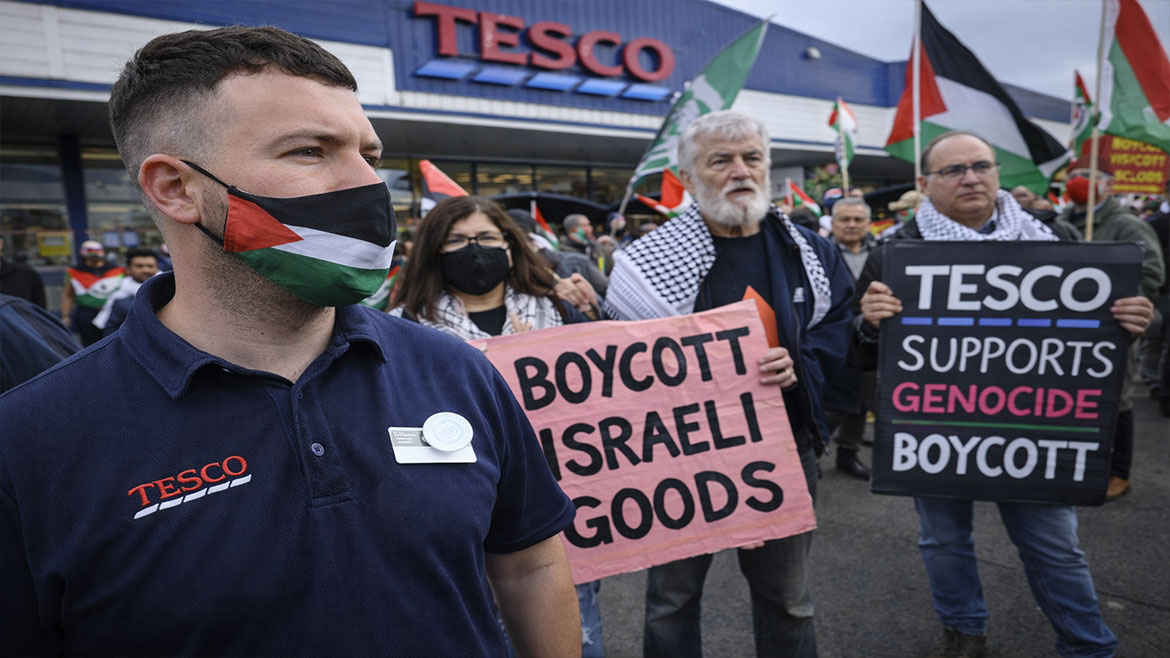
In a quiet seaside town in County Down, Northern Ireland, a supermarket worker’s personal stance against selling Israeli goods amid the Gaza conflict has sparked international attention. Troubled by images of devastation and starvation in Gaza, he began informing customers that some produce came from Israel and eventually refused to scan or sell Israeli-grown fruits and vegetables. His refusal led to suspension by Tesco, which triggered protests outside the store in Newcastle.
After public backlash, Tesco reinstated him in January but reassigned him to a role where he no longer handles Israeli products. He has since become a symbol for workers aiming to translate moral outrage into workplace action, encouraging others to follow suit with union support.
This incident is part of a broader labor-led movement across Europe seeking to halt trade with Israel. Unions in Ireland, the UK, and Norway have passed motions supporting employees who refuse to handle Israeli goods. Retail cooperatives like Co-op UK and Italy’s Coop Alleanza 3.0 have also removed certain Israeli products in response to the conflict.
The movement draws historical inspiration from the 1984 Dunnes Stores boycott in Ireland, where workers refused to handle goods from apartheid South Africa, contributing to Ireland becoming the first Western European country to ban trade with South Africa. Activists like Damian Quinn of BDS Belfast believe similar tactics can pressure Israel to comply with international law and end human rights abuses in Palestine.
The Boycott, Divestment and Sanctions (BDS) movement, launched in 2005, advocates for economic, cultural, and academic boycotts of Israel until it ends its occupation of Palestinian territories. It calls for divestment by various institutions including banks, councils, universities, churches, pension funds, and governments.
These campaigns are influencing state-level policies: Slovenia banned imports from Israeli settlements in August 2025, Spain followed with a similar ban in early 2026, and student protests in the Netherlands in 2025 spurred parliamentary calls for restrictions on settlement products.
Meanwhile, Ireland’s Occupied Territories Bill, aiming to ban trade from illegal Israeli settlements in the West Bank, remains stalled despite unanimous parliamentary support. Pro-Palestine MP Paul Murphy attributes the delay to indirect pressure from Israel via the US and accuses the government of postponing action while awaiting legal advice.
As individual acts of conscience combine with wider political efforts, European labor and civil society movements are testing their power to influence government policy on trade with Israel and push for accountability in the ongoing conflict.