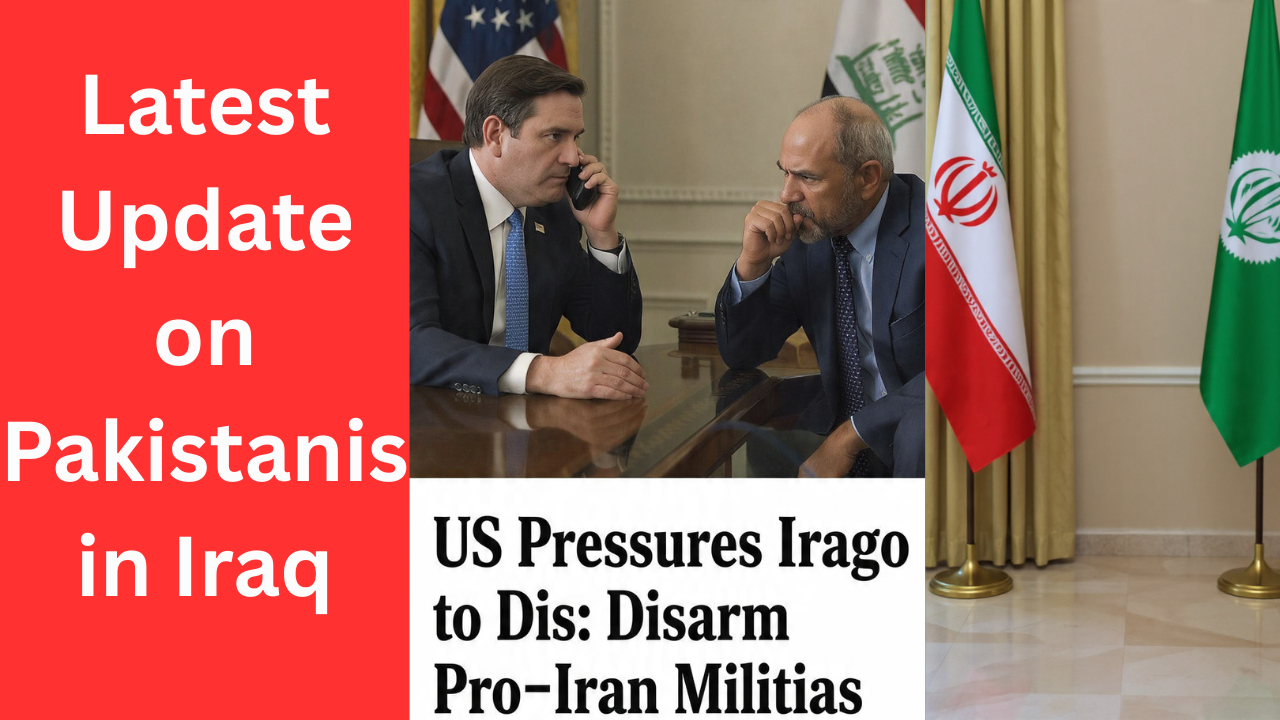
BAGHDAD — On October 21, U.S. Secretary of State Marco Rubio held a phone conversation with Iraqi Prime Minister Mohammed Shia al-Sudani, during which Washington urged Baghdad to “disarm” pro-Tehran militias operating inside Iraq.
This marked the first time a senior U.S. official has explicitly used the word “disarm” in reference to the Iran-aligned Popular Mobilization Forces (PMF), signaling a tougher U.S. stance toward these factions.
However, the message was not well received in Baghdad. The Iraqi Prime Minister’s Office released a statement that subtly criticized Washington’s “unilateral measures” affecting Iraq and called instead for continued “communication and consultation.” Analysts believe this response was aimed at rejecting U.S. interference in Iraq’s internal security affairs.
According to Hayder al-Shakeri, a research fellow at Chatham House’s Middle East and North Africa Programme, the phone call highlights an increasingly transactional phase in U.S.–Iraq relations.
“While Sudani seeks dialogue and coordination, he must also balance domestic forces who view these groups as integral to Iraq’s power structure. This will likely mean continued engagement, but with growing tension,” he said.
The Rubio–Sudani call came amid a series of American measures targeting Iranian influence in Iraq. In September, the U.S. State Department designated four Iran-backed Shia militias — Harakat al-Nujaba, Kataib Sayyid al-Shuhada, Harakat Ansar Allah al-Awfiya, and Kataib al-Imam Ali — as Foreign Terrorist Organizations (FTOs), citing their involvement in attacks on the U.S. Embassy and coalition bases in Iraq.
Earlier this month, the U.S. Treasury Department imposed sanctions on the Muhandis General Company, a major business entity operating under the PMF umbrella, as well as on several IRGC-affiliated financial networks accused of laundering money for Tehran.
Prior to these moves, Washington had lobbied Iraqi lawmakers not to pass legislation that would formalize the PMF as an official state institution, warning that such a law would “institutionalize Iranian influence” and “undermine Iraq’s sovereignty.” Ultimately, the proposed legislation did not advance in parliament — a relief for Washington.
Meanwhile, two diplomatic appointments have reinforced U.S. focus on Iraq.
-
Josh Harris was appointed Chargé d’Affaires at the U.S. Embassy in Baghdad — a veteran diplomat with deep experience in Iraq policy.
-
Mark Savaya, a Trump ally long involved in Iraqi affairs, was named Special Envoy for Iraq.
According to Dr. Norman Ricklefs, Chairman and CEO of the NAMEA Group, these appointments signal “a renewed U.S. commitment to re-engage in Iraq.”
“We can expect more pressure on Iraq’s ties with Iran, especially concerning militia disarmament, sanctions evasion, and oil smuggling,” he said.
Analysts suggest that the Trump administration now views Iraq as a key battleground for limiting Iran’s regional reach. Following recent setbacks to Tehran’s foreign policy — including the weakening of Hezbollah and Hamas, and the downfall of Bashar al-Assad’s regime in Syria — Washington sees an opportunity to reshape the Middle East balance of power.
As Dr. Javad Heiran-Nia, Director of the Persian Gulf Studies Group at the Center for Scientific Research and Middle East Strategic Studies in Iran, explained:
“The disarmament or integration of Iraq’s PMF into the official Iraqi military structure is a critical step in the U.S.-Israeli vision for a new Middle East peace framework.”
In this evolving scenario, Iraq once again finds itself caught in the geopolitical tug-of-war between Washington and Tehran — struggling to preserve sovereignty while managing the competing demands of two powerful rivals.